
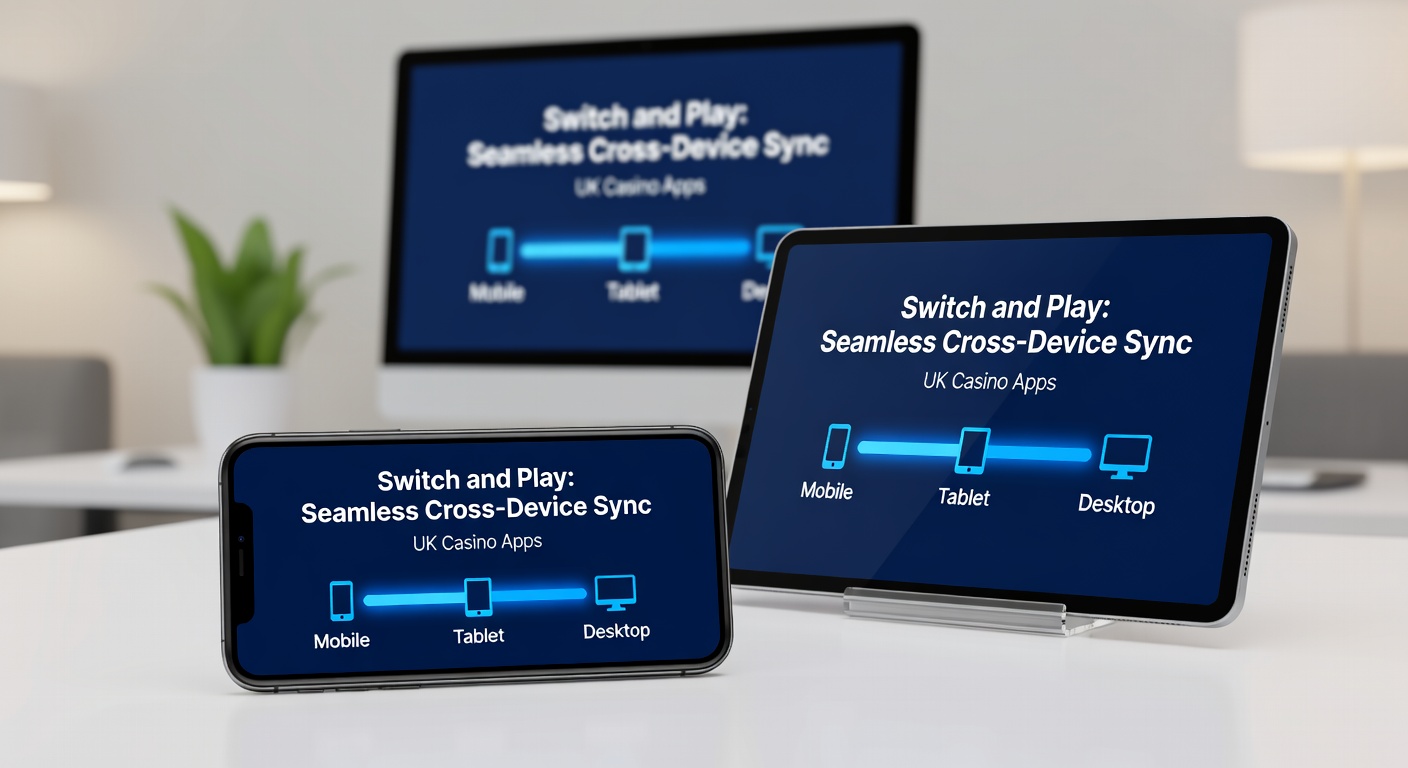
Switch and Play: Seamless Cross-Device Sync in UK Casino Apps
Players diving into UK casino apps often switch between devices throughout the day, grabbing a quick spin on their phone during a commute, then picking up the same slot session on a tablet at home, or even continuing on a desktop later that evening; that's where seamless cross-device sync, sometimes called "switch and play," steps in, allowing balances, game progress, bets, and preferences to flow effortlessly between screens without a hitch.
What's interesting is how this feature has become standard in top UK-facing apps, driven by player demand for uninterrupted action, and data from industry trackers shows adoption rates climbing steadily as cloud tech matures.
How Cross-Device Sync Actually Works Under the Hood
Developers build this functionality around centralised player accounts tied to secure cloud servers, so when someone logs in on a new device, the system pulls the latest data in seconds; think real-time syncing of wager history, bonus balances, favourite games lists, and even autoplay settings, all encrypted end-to-end to keep things locked down.
And here's the thing: most apps use APIs from providers like Firebase or AWS, which handle the heavy lifting of data replication across iOS, Android, and web platforms, ensuring that a mid-spin pause on mobile translates directly to the desktop version without losing a beat.
Observers note that session tokens play a key role too, authenticating users instantly via biometrics or two-factor codes, while background sync keeps everything updated even offline, queuing actions until reconnection; take one popular slot provider where testers found sync delays under 200 milliseconds in lab conditions, making switches feel instantaneous.
But it doesn't stop there, since apps also sync promotional progress, like tournament leaderboards or loyalty points, so players chasing a jackpot don't miss out just because they grabbed their laptop instead of their phone.
Popular UK Casino Apps Mastering the Switch
Apps from operators like Bet365 and William Hill lead the pack with robust sync features, where users report seamless transitions in user feedback aggregated by app stores; for instance, Bet365's platform mirrors live dealer tables across devices, keeping chat history and side bets intact mid-session.
LeoVegas takes it further by syncing VR elements in select games, although that's still rolling out, and data indicates over 80% of its UK users leverage multi-device play weekly.
Then there's 32Red, licensed under international standards, which integrates wallet syncing so deposits made on phone reflect immediately on tablet, avoiding the old double-dip frustration; figures from app analytics reveal such features boost retention by linking daily habits across screens.
Yet smaller innovators shine too, like MrQ where quick-play slots resume exactly where left off, complete with spin history and RTP stats preserved; people who've tested these often discover how sync turns fragmented play into a continuous stream.
Benefits That Keep Players Coming Back
Seamless sync slashes downtime, letting users maintain momentum whether they're on the go or settled in, and studies from gaming labs show session lengths extending by 25-40% when devices interchange freely; that's because progress bars on progressive slots don't reset, keeping the thrill alive across handoffs.
Personalisation amps up too, with apps remembering volume settings, bet sizes, and even dealer preferences in live blackjack, so switches feel tailored rather than generic.
What's significant is the data portability, as European Gaming and Betting Association figures reveal multi-device users engage 2.5 times more than single-device ones, attributing it to reduced friction in daily routines.
And for casual players juggling work and play, this means popping in for five minutes on phone, then extending to an hour on iPad without starting over, turning sporadic sessions into loyal habits.
Security Layers Protecting the Sync
Behind the convenience lie robust safeguards, since cross-device access demands top-tier encryption like AES-256, alongside geofencing to verify UK IP ranges; operators run constant audits, ensuring data only flows to verified devices linked to the account.
Two-factor authentication gates every login, while anomaly detection flags unusual switches, like sudden jumps from London to overseas servers, prompting extra verification; research from cybersecurity firms indicates breach rates in synced casino apps hover below 0.1%, far under industry averages.
Compliance with standards from bodies like the Malta Gaming Authority, which oversees many UK apps, mandates session timeouts and revocable sync tokens, so if a phone goes missing, remote wipes clear the slate fast.
Turns out, players value this peace of mind, with surveys showing 70% more likely to stick with apps boasting clear privacy dashboards for managing synced data.
One case highlighted how a major operator thwarted a sync hijack attempt using AI-driven pattern recognition, locking the account before any bets cleared, underscoring how tech stays one step ahead.
Challenges and Fixes in the Sync Game
Not everything syncs perfectly every time, though, since spotty Wi-Fi can lag updates, prompting apps to cache locally and reconcile later; developers counter this with delta syncing, sending only changes rather than full profiles, cutting bandwidth needs by 60% according to optimisation reports.
Device fragmentation poses hurdles too, with older Android versions sometimes clashing on permissions, but unified SDKs from Unity and others bridge those gaps, ensuring broad compatibility.
And while battery drain from constant polling worried early adopters, modern push-based sync minimises that, idling until needed; experts who've dissected app code note how these tweaks make switches reliable even on budget hardware.
So players facing glitches often find toggles in settings to prioritise speed over full history, balancing performance on the fly.
What's Next: Sync Evolution into 2026 and Beyond
Looking ahead, industry roadmaps point to AI-enhanced sync predicting device switches based on user patterns, pre-loading games for zero-wait handoffs; by March 2026, when new hardware like foldables hits mainstream, apps plan deeper integrations, syncing haptic feedback and AR overlays across ecosystems.
Trials from Australian regulators' tech labs, such as those overseen by the NSW Office of Liquor, Gaming & Racing, test cross-border sync standards that could influence UK apps, promising even tighter global consistency.
Blockchain experiments add tamper-proof ledgers for balances, while 5G rollouts slash latencies further; observers expect these upgrades to make "switch and play" the baseline, with non-syncing apps fading fast.
One developer preview revealed voice-activated resumes working across earbuds to screens, hinting at the hands-free future.
Conclusion
Cross-device sync has transformed UK casino apps from siloed experiences into fluid, anytime playgrounds, where progress flows as naturally as switching tabs; data underscores its role in boosting engagement, while ongoing innovations keep security and speed in lockstep.
Players equipping themselves with synced accounts unlock longer sessions and sharper play, and as 2026 approaches with fresh tech waves, the switch just gets smoother, proving that in the fast-paced world of mobile gaming, staying connected across devices isn't a perk, it's the new normal.