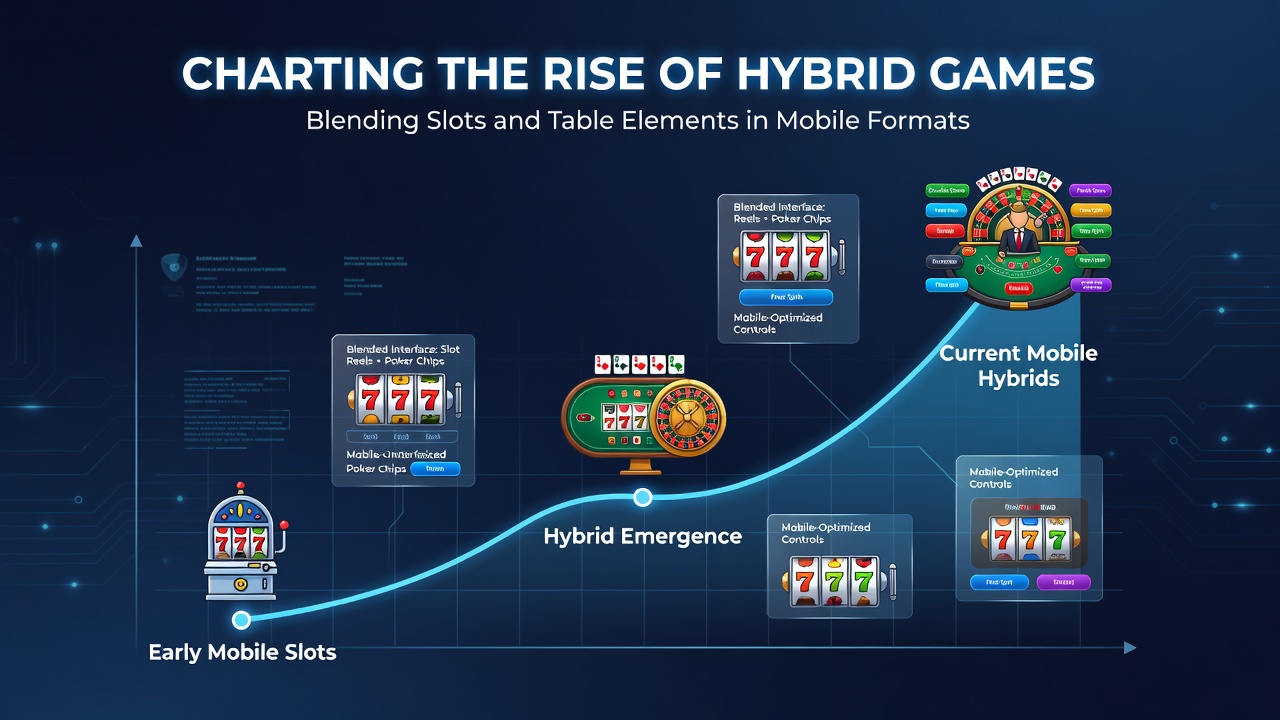
Hybrid Games Fuse Slot Spins With Table Game Decisions on Mobile Screens
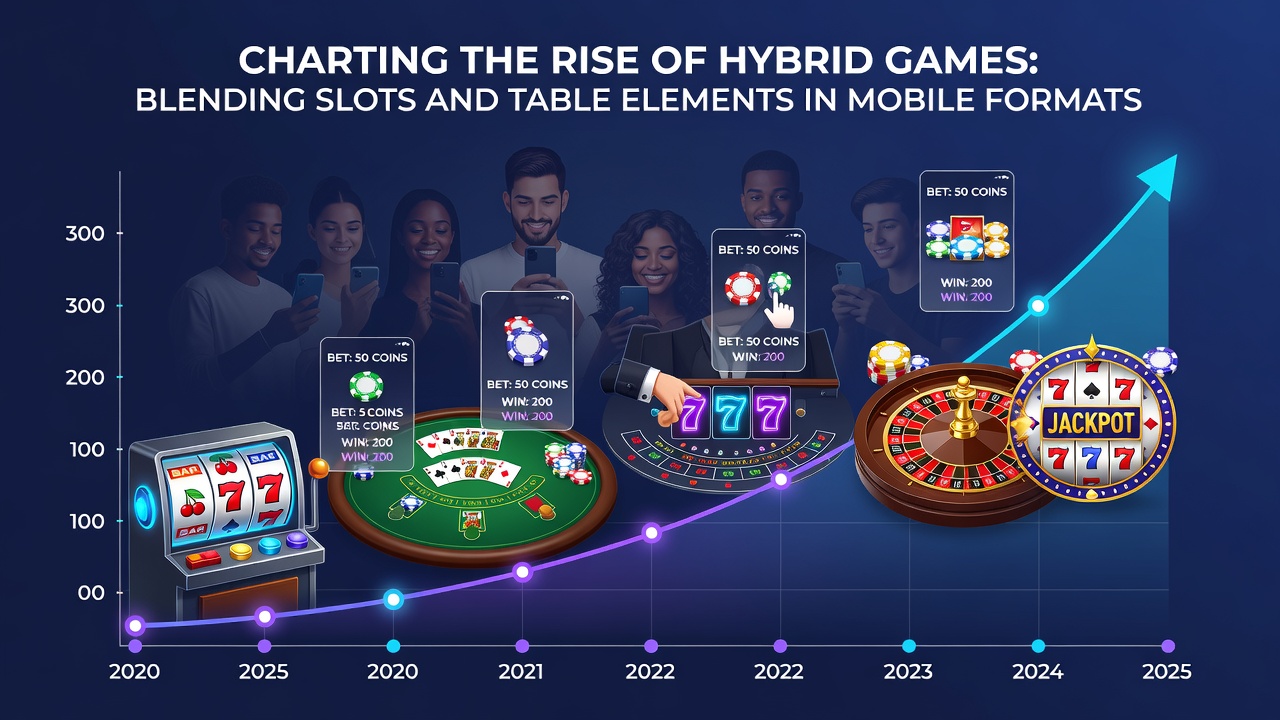
Developers have expanded mobile offerings by merging reel-spinning mechanics with strategic choices drawn from blackjack, roulette, and poker, and these hybrids now appear across multiple platforms where users tap to place bets and trigger modifiers in a single session. Data from the Canadian Gaming Association shows participation in such titles rose 27 percent between 2024 and 2025, driven by touch-screen controls that let players adjust wager sizes or select card draws without switching apps.
Game studios integrate familiar slot symbols alongside table elements such as community cards or wheel segments, and one title released in early 2025 lets users spin five reels while simultaneously deciding whether to hit or stand on a virtual hand. Observers note that session lengths increased when these layered choices appeared because players remained engaged longer than they did with standard reel games alone.
Design Shifts That Enable Hybrid Play
Interface designers reduced screen clutter by collapsing multiple betting panels into swipe gestures and collapsible menus, while animation teams synchronized reel stops with card reveals so every outcome feels connected rather than sequential. Research published by the University of Nevada, Las Vegas gaming laboratory indicates that titles using synchronized feedback loops retain users 19 percent longer than those separating slot and table phases into distinct rounds.
Sound engineers layer ambient table chatter beneath reel chimes, and programmers embed conditional multipliers that activate only after a player completes a blackjack-style choice. These technical choices keep memory usage under 180 MB on average devices, allowing smooth performance even during extended play windows.
Market Data Pointing to Steady Growth
Figures released by Gambling Research Australia in March 2025 list hybrid titles among the top three revenue categories for mobile operators in that region, accounting for 14 percent of total gross gaming yield. European operators reported similar patterns, with download volumes climbing through the second quarter and showing no signs of slowing ahead of June 2026 updates scheduled by several major studios.
Those updates include new regulatory sandboxes in select jurisdictions that permit limited live testing of decision-based modifiers before full rollout, and developers have already prepared variants that comply with stake caps and session reminders required in those markets.
Player Behavior Patterns Observed in Recent Reports
Analytics firms tracking touch heatmaps found that users who engage with hybrid elements revisit the same game three times more often than they return to pure slot titles. Retention curves flatten after the first week only when decision layers offer meaningful outcomes rather than cosmetic choices, according to a 2025 industry white paper from the American Gaming Association.
Players frequently toggle between auto-spin modes and manual decision prompts within the same session, and session logs indicate that manual interventions spike during bonus rounds where table elements carry higher payout potential. Operators adjust bonus structures accordingly, offering free decision tokens that reset daily rather than weekly to match this rhythm.
Regulatory Context Across Regions
Authorities in New Jersey and Ontario have issued guidance documents that classify hybrids under existing game-type approvals provided the random number generator covers both reel and card outcomes equally. Compliance teams therefore run separate certification paths for each mechanic, yet the overall approval timeline remains comparable to standard slot submissions.
Operators preparing for June 2026 market expansions have already submitted hybrid variants that incorporate mandatory reality-check pop-ups triggered after 30 minutes of continuous play, satisfying requirements in multiple Canadian provinces simultaneously.
Technical Infrastructure Supporting Expansion
Cloud-based game servers now handle simultaneous reel calculations and table logic without latency spikes above 80 milliseconds on 5G connections, and fallback routines switch to local processing when signal strength drops. Device manufacturers have collaborated on API extensions that expose accelerometer data for optional tilt-to-decide features in select titles.
These backend improvements allow smaller studios to publish hybrids without maintaining dedicated server fleets, lowering entry barriers and increasing the variety of mechanics available to users each quarter.
Conclusion
Hybrid formats continue to evolve as developers refine the balance between chance-based spins and player-controlled table actions on mobile devices. Industry metrics track consistent uptake across regions, while infrastructure and regulatory frameworks adapt to accommodate the combined mechanics. Observers expect further iterations to appear before the close of 2026 as studios respond to usage data and compliance updates already in motion.