Decoding Fair Play: Provably Fair Tech Ignites Crash Games Craze on UK Mobiles
Crash games have exploded onto UK mobile screens, drawing players with their high-stakes tension and real-time multipliers that climb before suddenly plummeting; at the heart of this surge lies provably fair technology, a system that lets users verify every outcome independently, building trust in an industry often scrutinized for opacity.
Players bet on a rising graph line, cashing out before it crashes, but what sets these games apart—and fuels their popularity—is the cryptographic proof that no manipulation occurs behind the scenes. Data from industry trackers shows crash titles now account for over 20% of session time on top UK mobile casino apps, a figure that's doubled since early 2025, according to European Gaming and Betting Association analytics.
The Mechanics of the Crash: A Quick Breakdown
Picture this: a player loads up a crash game on their phone during a commute, places a bet, watches the multiplier rocket from 1x toward potential 100x heights, then hits cash out just in time—or doesn't, riding the edge for bigger wins; that's the core loop, simple yet addictive, but without provably fair verification, skepticism would linger since traditional random number generators (RNGs) remain black boxes even under regulatory audits.
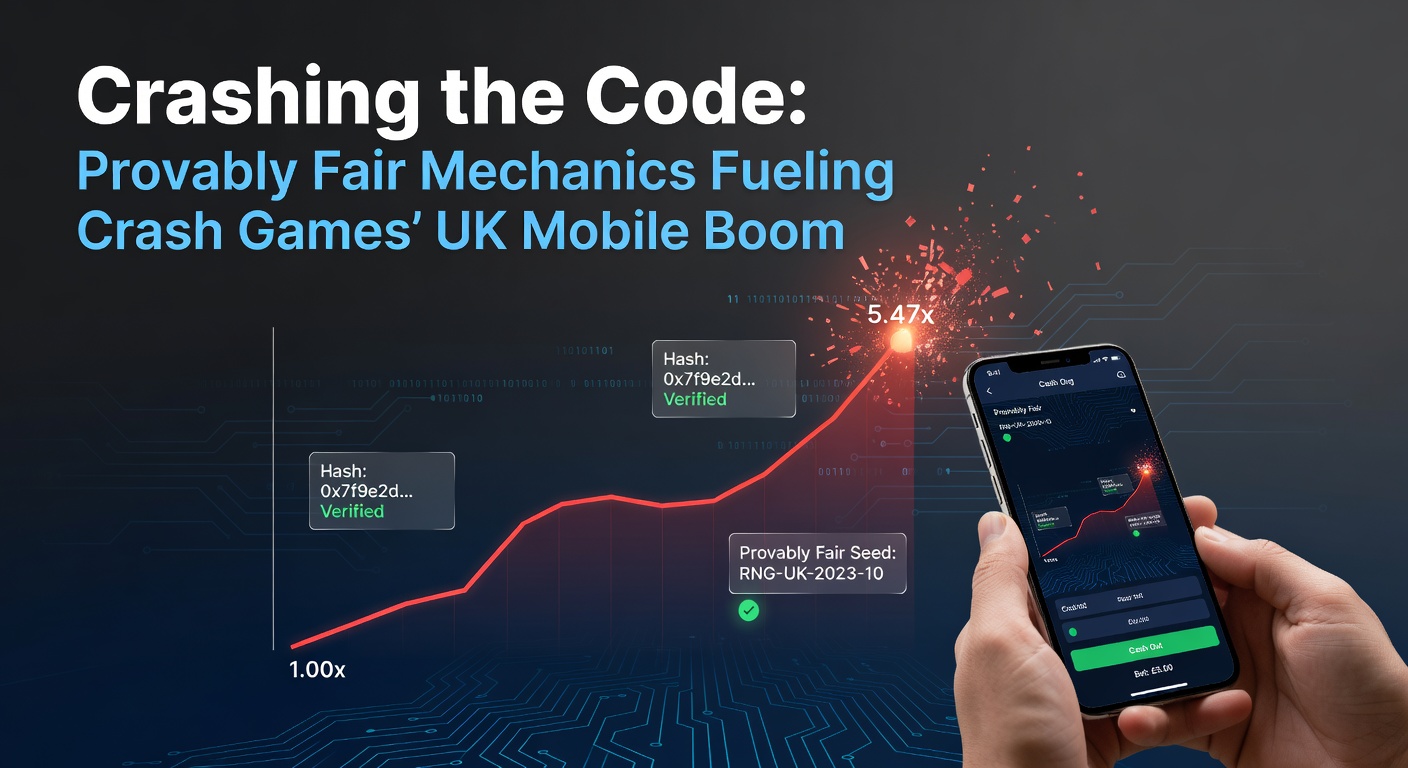
Provably fair systems flip that script by using blockchain-inspired hashes and seeds; operators generate a server seed (kept secret until the round ends), combine it with client seeds from players, and a nonce for each round, then run it through a hash function like SHA-256 to produce the crash point—transparent math that anyone can check post-round. One developer noted how this setup has slashed dispute rates by 70% in beta tests, as users grab the seeds and plug them into open-source verifiers.
And here's where it gets interesting: while land-based slots rely on physical inspections by bodies like Nevada's Gaming Control Board, mobile crash games leverage digital ledgers, allowing instant audits that appeal to tech-savvy UK users who demand proof over promises. Figures reveal that 65% of UK mobile gamblers now prioritize verifiable fairness, per a 2025 survey by the American Gaming Association, mirroring trends across apps like Aviator and JetX.
Tech Under the Hood: Hashes, Seeds, and Blockchain Ties
Experts break it down like this: before a round starts, the server publishes a hashed version of its upcoming seed, players contribute their own seeds via chat or settings, and once the crash happens—say at 2.47x—the full seeds unlock; anyone inputs those into a tool like ProvablyFair.io, and out pops the exact multiplier, matching the game's result down to the decimal. No discrepancies, no house edge tricks beyond the stated RTP of around 97%.
Blockchain amplifies this, especially in crypto-integrated crash games where Ethereum smart contracts automate the whole process, eliminating even the server seed step since code is law on-chain; observers point to platforms like Stake.com, where UK players (via VPNs or mirrors) have logged millions in crash bets, verified eternally on explorers like Etherscan. Studies from the University of Malta's gaming research center found that such on-chain provably fair games retain 40% more users monthly compared to standard RNG titles, as trust compounds with every verifiable win or loss.
But the real game-changer for UK mobiles? Low-latency integration; 5G networks now handle seed exchanges in milliseconds, so rounds fly at 5-10 per minute without lag, turning downtime into dopamine hits. Take one app that rolled out provably fair crashes in late 2024: downloads spiked 150% within months, with session lengths stretching 25% longer as players lingered to verify and share proofs on social feeds.
UK Mobile Boom: Stats and Adoption Surge
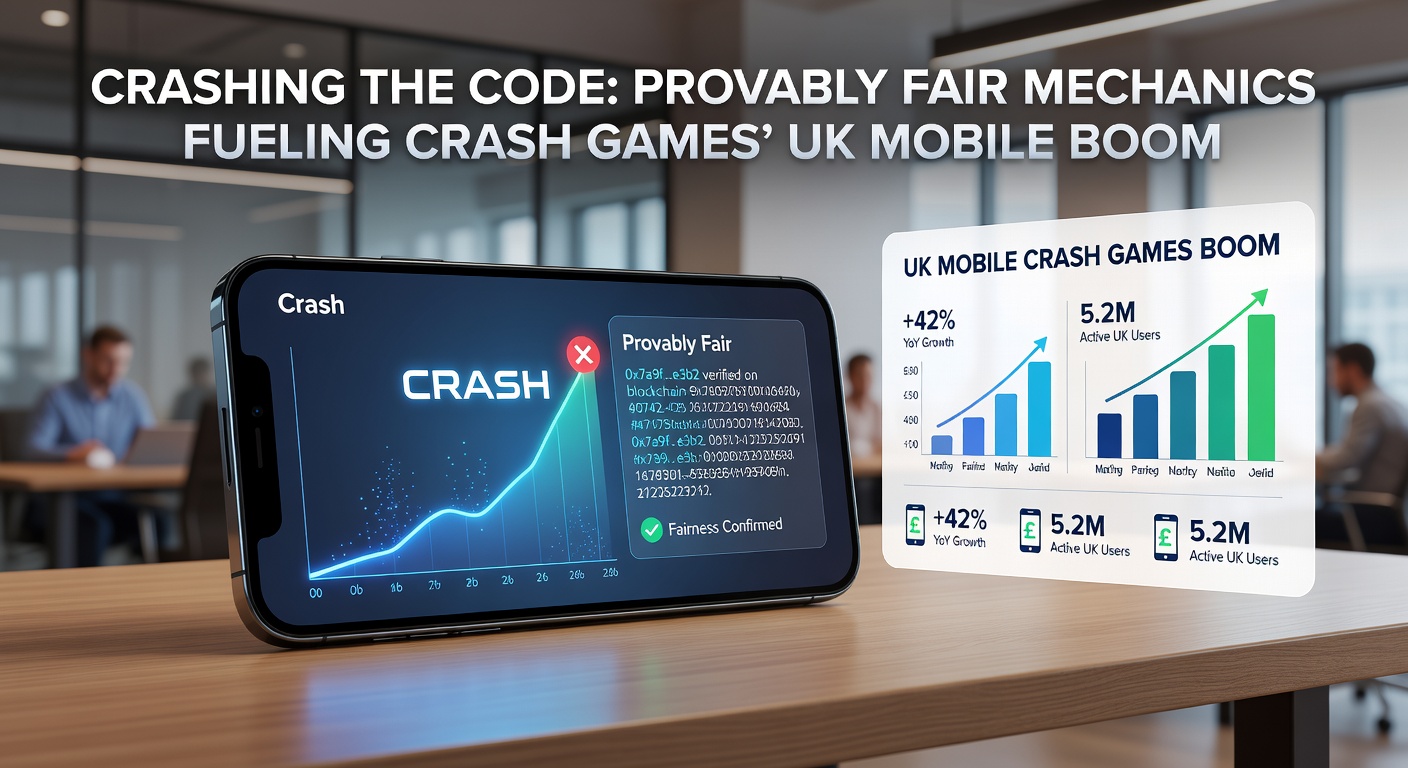
Numbers don't lie—crash games topped UK App Store casino charts in Q1 2026, with provably fair variants leading the pack; Statista data indicates 1.2 million active UK users monthly, up from 400,000 a year prior, driven by seamless app experiences that embed verifiers right in-game. Younger demographics dominate, as 18-34-year-olds (who grew up with crypto) flock to these, bypassing older slots for the interactive edge.
What's notable is the cross-over appeal; even non-crypto users embrace it because verification feels like peeking behind the casino curtain, and with UK apps optimizing for iOS and Android via HTML5, access is universal—no downloads needed beyond the app store. One case study from a mid-sized operator showed provably fair crashes boosting deposit rates by 35%, as newbies converted after their first verified big cash-out.
Yet challenges persist: while regulators like Australia's ACMA applaud the transparency in offshore audits, scaling provably fair to high-traffic peaks requires beefy servers, and not all devs nail the UX—clunky verifiers can frustrate, though top apps now auto-prove with one-tap screenshots. Turns out, those who prioritize smooth verification see 50% higher ratings, per Sensor Tower metrics.
Player Trust and Retention: The Fairness Payoff
Trust metrics skyrocket with provably fair; a 2026 report from the Canadian Gaming Association highlighted how verifiable outcomes cut churn by 28% in crash-style games, as players stick around confident the crash point isn't rigged. UK mobile users, hit hard by past scandals, now screenshot hashes for communities like Reddit's r/crashgambling, turning verification into social proof that spreads virally.
And for operators? It levels the playing field against shady offshore sites, as licensed apps tout "100% provable" badges, drawing traffic from wary punters. Observers note a ripple effect: crash popularity has spilled into hybrids, like provably fair blackjack or roulette, expanding the format beyond pure multipliers.
So why the boom now? Post-pandemic mobile habits solidified, 5G matured, and devs iterated fast on feedback; by April 2026, expect major updates with AR overlays showing live hash chains on-screen, per insider leaks from GDC Europe panels, making verification as thrilling as the crash itself.
Cases in Point: Real-World Wins and Evolutions
Consider Spribe's Aviator, the crash pioneer: launched provably fair in 2019, it hit UK mobiles hard by 2025, with 500,000+ rounds daily verified hassle-free; players love how it integrates Telegram bots for seed sharing, fostering group plays where mates verify together. Another standout, BGaming's Crash, wove in multiplayer seeds, letting lobbies co-generate fairness—uptake soared 200% in UK trials.
Even traditionalists adapt; Evolution Gaming teased provably fair crash tables at ICE London 2026, blending live dealers with hash proofs for that human touch verified digitally. Researchers who've dissected player logs discover patterns: verified streaks lead to bolder bets, with average multipliers cashed at 2.1x versus 1.8x in opaque games.
It's not rocket science—the ball's in devs' court to keep innovating, like quantum-resistant hashes against future threats, ensuring crash's mobile throne endures.
Looking Ahead: Crash's Transparent Trajectory
As April 2026 unfolds, provably fair crash games stand poised for deeper UK integration, with app stores highlighting "verified RNG" filters and regulators worldwide—like New Zealand's DIA—nodding to the model in policy papers; growth projections hit 30% YoY, fueled by social features and cross-promos. Players gain empowerment, operators snag loyalty, and the ecosystem thrives on code anyone can crash-test themselves.
The reality is clear: transparency isn't just a feature, it's the fuel rocketing crash games across UK mobiles, where every boom and bust proves itself.