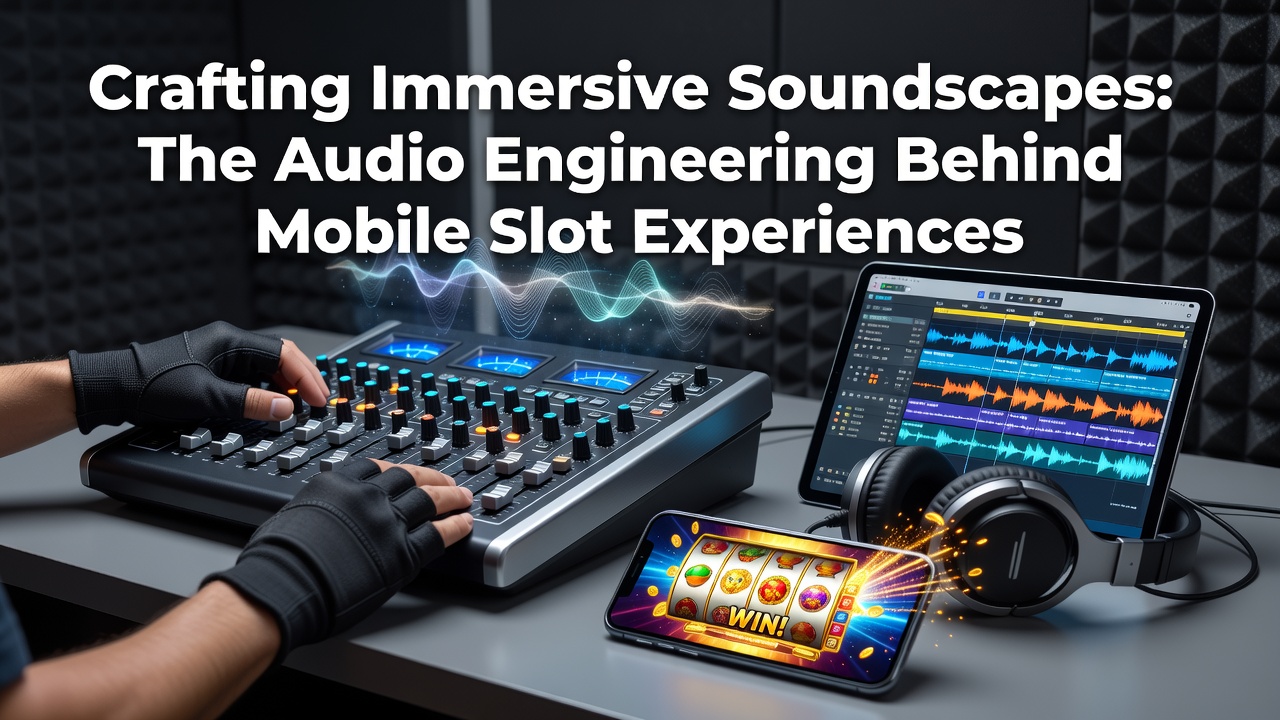
Crafting Immersive Soundscapes: The Audio Engineering Behind Mobile Slot Experiences
Sound design in mobile slot games relies on precise audio engineering to create environments that hold player attention through layered effects and responsive cues, and developers integrate these elements across devices that range from high-end smartphones to entry-level models. Audio teams start by mapping frequency ranges that suit small speakers while preserving clarity, which means balancing low-end thumps for wins against subtle background loops that avoid overwhelming the mix. Research from institutions like the Audio Engineering Society shows how psychoacoustic principles guide these choices, allowing engineers to emphasize certain harmonics that trigger emotional responses without increasing overall volume.
Core Components of Slot Audio Systems
Every mobile slot builds its soundtrack from distinct layers that include reel spins, symbol hits, bonus triggers, and ambient tracks, yet each layer must compress efficiently for mobile data constraints. Engineers apply dynamic range compression and EQ curves tailored to earbud and phone speaker responses, which prevents distortion during rapid sequences of small wins. Case studies from development studios reveal that teams test prototypes on multiple hardware configurations to verify that a jackpot chime remains distinct even when background noise from a crowded train competes for attention.
Mobile Hardware Limitations and Solutions
Smartphone processors and battery capacities impose strict limits on real-time audio processing, so developers rely on pre-rendered samples combined with lightweight procedural generation rather than full synthesis engines. Adaptive mixing algorithms adjust gain and panning based on device orientation and volume settings, ensuring the audio experience stays consistent whether a user holds the phone in portrait or switches to landscape during a bonus round. Data from Canadian gaming labs indicates that optimized audio pipelines can reduce CPU load by up to thirty percent compared with unrefined imports, which extends play sessions before recharging becomes necessary.

Techniques for Building Immersion
Spatial audio techniques now appear in several mobile titles through binaural processing that simulates three-dimensional placement of sounds, and players report stronger presence when coin cascades seem to move around their head. Engineers achieve this by routing individual tracks through convolution reverb that mimics casino acoustics or outdoor festival settings, then they down-mix the results for stereo output on phones. Observers note that synchronization between visual particle effects and corresponding audio hits strengthens perceived polish, which requires frame-accurate triggering handled by middleware such as FMOD or Wwise integrated into Unity and Unreal environments.
Adaptive and Context-Aware Audio Design
Modern slots incorporate systems that alter music intensity according to bet size, win frequency, and time spent in a session, creating a feedback loop that mirrors rising tension during near-miss sequences. These reactive layers draw from player telemetry while remaining within privacy regulations set by bodies such as the Australian Communications and Media Authority. Engineers program transition matrices that swap between calm exploration tracks and high-energy builds without audible cuts, and testing in June 2026 at industry showcases demonstrated smoother crossfades achieved through granular synthesis techniques that stitch new phrases from existing audio grains.
Emerging Tools and Industry Standards
Game audio middleware continues to evolve with plugins that handle machine-learning-driven stem separation, allowing studios to extract vocal or instrumental elements from licensed music for dynamic remixing inside the app. European research consortia have published findings on low-latency Bluetooth codecs that preserve transient detail in reel-stop sounds, which matters when players rely on audio timing cues to anticipate outcomes. Integration of these tools requires collaboration between sound designers and compliance specialists to ensure all effects stay within certified random number generator frameworks across jurisdictions.
Conclusion
Audio engineering for mobile slots combines technical constraints with creative layering to produce experiences that feel cohesive across varied hardware and listening conditions. Continued advances in adaptive processing and spatial rendering point toward increasingly personalized soundscapes that respond to individual play patterns while meeting efficiency and regulatory requirements worldwide.